
Smoking Withdrawal Symptoms: What to Expect When You Quit
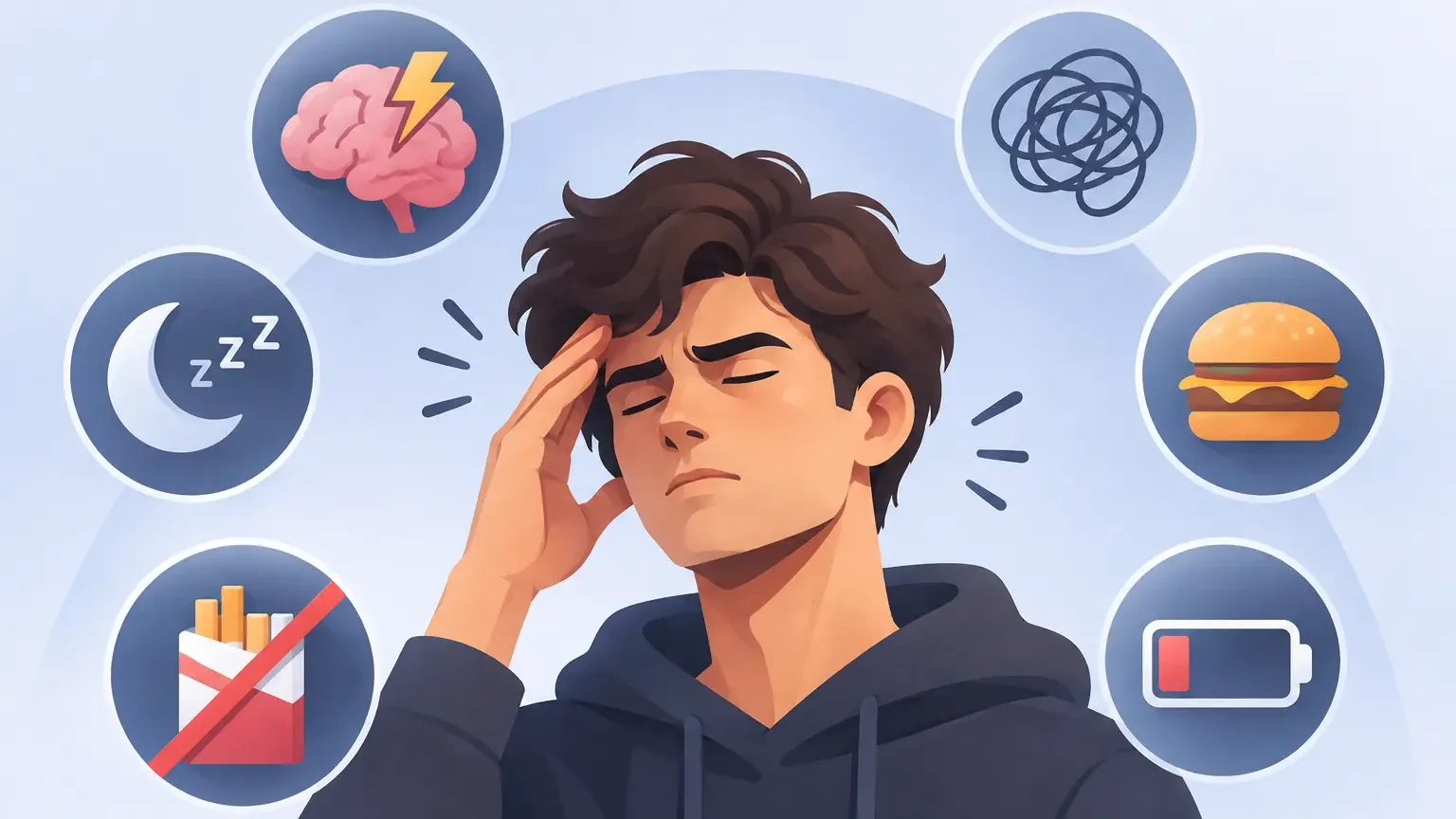

Smoking withdrawal symptoms usually start within 4 to 24 hours of your last cigarette and peak on day 2 or 3. The most common are cravings, irritability, anxiety, low mood, trouble sleeping, poor concentration and increased appetite. Most fade within 3 to 4 weeks, and they are uncomfortable but not harmful.
What is nicotine withdrawal?
When you smoke, nicotine reaches your brain within seconds and raises dopamine in its reward circuits. According to the National Institute on Drug Abuse, repeated exposure changes how sensitive these circuits are, and your brain gets used to having nicotine around. When you stop, it has to readjust. Withdrawal is what that readjustment feels like.
The good news: as Cleveland Clinic puts it, nicotine withdrawal isn’t harmful to your health. The symptoms are temporary, and every one of them is a sign that your body is recovering, not that something is going wrong.
Smoking withdrawal symptoms at a glance
Most symptoms begin 4 to 24 hours after your last cigarette (Cleveland Clinic). This table shows how long each one typically lasts and what helps, based on the MSD Manual. Everyone is different, so treat the durations as a guide, not a deadline.
| Symptom | How long it usually lasts | What helps |
|---|---|---|
| Cravings | Most intense for 2–3 days, then easing | Distract yourself, move your body, wait it out |
| Irritability | 2–4 weeks | Walks, warm baths, relaxation techniques |
| Low mood | 1–2 weeks | Activities you enjoy, support from family and friends |
| Trouble concentrating | A few weeks | Plan your workload ahead, take short breaks |
| Trouble sleeping | About 1 week | No caffeine after noon, a regular bedtime |
| Fatigue | 2–4 days | Naps, don’t overexert yourself |
| Increased hunger | Up to several weeks | Water, low-calorie snacks |
| Dizziness | 1–2 days | Change position slowly |
| Cough | A few days | Drink plenty of fluids |
| Chest tightness | A few days | Slow, deep breathing |
| Constipation | 1–2 weeks | Fluids and high-fiber foods |
Cleveland Clinic also lists some less common symptoms: headaches, nausea, nightmares, sore throat and dry mouth. Like the others, they come from the lack of nicotine, not from an infection, and they pass on their own.
When does nicotine withdrawal peak?
Withdrawal is at its worst early. Cleveland Clinic says symptoms peak on the second or third day without nicotine, and the NHS says they are usually strongest during the first week, especially the first 3 days. After that, they slowly become less intense and less frequent.
The hardest day of quitting smoking
For many people, it is day 3. By then nicotine has left the blood, the novelty of quitting has worn off and withdrawal is at its peak. Smokefree.gov also notes that the first week is when you are most at risk of slipping up. Plan those days in advance: keep busy, stay away from your usual triggers and decide now what you will do when a strong craving hits.
How long does nicotine withdrawal last?
According to the NHS, symptoms last 3 to 4 weeks on average, although some people feel them for a few months. Smokefree.gov adds that the worst of them only last a few days to a couple of weeks. Two symptoms tend to hang on longer: occasional cravings, which can surface months later in familiar situations, and increased appetite.
The first four weeks are worth the effort. The NHS says that once you reach 28 days smoke-free, you are 5 times more likely to stay quit for good. To see what else changes in your body along the way, read our quit smoking timeline.
How long does nicotine stay in your system?
Not long. According to the National Cancer Institute, nicotine has a half-life of about 2 hours, and the CDC says nicotine in the blood drops to zero within 24 hours. Your body turns most of it into cotinine, which has a half-life of about 16 hours and lingers for several days. That is why cotinine, not nicotine, is what most tests look for; how long a test can detect it depends on the type of test and how much you smoked.
Withdrawal lasts longer than the nicotine itself because it is your brain, not your blood, that needs time. In a 2009 study in the Archives of General Psychiatry, the brain’s nicotine receptors, which smokers have more of, returned to non-smoker levels after 6 to 12 weeks on average.
Negative effects of quitting smoking
Quitting smoking is one of the best things you can do for your health, but it is fair to know about the downsides. Besides the symptoms in the table above, these are the side effects people notice most.
- Weight gain. A 2012 meta-analysis in the BMJ found an average gain of 4 to 5 kg (9 to 11 lb) after 12 months, mostly in the first 3 months. The range is wide: some people gain nothing or even lose weight. Regular meals, crunchy healthy snacks and more movement help.
- Coughing more, not less. As Mayo Clinic explains, the tiny hairs that clear your airways start working again and push out built-up mucus. See a doctor if the cough lasts more than a month or you cough up blood.
- Mood swings. Irritability and low mood are common in the first weeks. In the long run, quitting is linked to less anxiety and stress, but if your mood stays low or you have thoughts of self-harm, talk to a doctor; in the US you can call or text 988.
- Feeling unwell. Headaches, sore throat or a general “flu-like” feeling can show up in the first days. They are a normal part of withdrawal and fade with time.
Is it better to quit suddenly or gradually?
Quitting all at once means facing withdrawal head-on, but in a 2016 trial in the Annals of Internal Medicine it worked slightly better: 22% of people who stopped abruptly were still smoke-free after six months, compared with 15.5% of those who cut down first. Cutting down can still be a good route if it ends at zero on a set date. Our guide to quitting smoking gradually has a step-down plan.
How to ease smoking withdrawal symptoms
- Use nicotine replacement or a quit medicine. Patches, gum and lozenges take the edge off physical symptoms. Ask a doctor or pharmacist which option suits you; prescription medicines are also available.
- Ride out each craving. A single craving passes within minutes. Chew carrots, celery or sugar-free gum, or take a slow breath in through your nose and out through your mouth (NHS).
- Avoid your triggers for the first 28 days. Coffee breaks, alcohol and other smokers are the classic ones. Change the routine around them for a while.
- Move your body. A short burst of activity reduces cravings and lifts your mood.
- Protect your sleep. Go to bed at the same time, keep screens out of the bedroom and limit caffeine, alcohol and late meals (Smokefree.gov).
- Get support. In the US, call 1-800-QUIT-NOW for free coaching; in the UK, your local NHS Stop Smoking Service can help. Quitting with support works better than quitting alone.
Get help at the hardest moments
Withdrawal tends to hit at the same moments every day: after meals, with coffee, at the end of the workday. Smoke Off sends you reminders at those critical moments, so you are ready before the craving takes over. When an urge does hit, one tap reminds you why you started and offers a mini game, a guided breathing exercise or a small task to get you through the next few minutes. Meanwhile, you can watch your smoke-free days, avoided cigarettes and money saved add up.
Your last cigarette is closer than you think.
Set your first goal in under 2 minutes and start smoking less today, at your own pace.
Frequently asked questions
What are the potential side effects of suddenly quitting smoking?
Mainly withdrawal symptoms: cravings, irritability, anxiety, low mood, trouble sleeping, poor concentration and increased appetite, sometimes with headaches, coughing or constipation. They peak on day 2 or 3 and usually fade within 3 to 4 weeks. Weight gain averages 4 to 5 kg after a year. None of these are harmful.
How long will nicotine withdrawal last?
According to the NHS, symptoms last 3 to 4 weeks on average, and the worst of them only a few days to a couple of weeks (Smokefree.gov). Occasional cravings and increased appetite can last longer.
How long does nicotine stay in your system?
Nicotine has a half-life of about 2 hours and is gone from the blood within about 24 hours. Its by-product cotinine has a half-life of about 16 hours and lingers for several days, depending on how much you smoked and the type of test.
When does nicotine withdrawal peak?
On the second or third day without nicotine, according to Cleveland Clinic. The NHS says symptoms are strongest in the first week, especially the first 3 days.
What is the hardest day of quitting smoking?
For many people it is day 3, when withdrawal peaks. The whole first week is the riskiest for slipping up, so it pays to plan it in advance.
Is nicotine withdrawal dangerous?
No. Cleveland Clinic states that nicotine withdrawal isn’t harmful to your health. See a doctor if a cough lasts more than a month, you cough up blood, or your mood stays very low.
Sources
- Cleveland Clinic, Nicotine Withdrawal
- NHS Better Health, Managing nicotine withdrawal symptoms
- National Cancer Institute, Smokefree.gov, Understanding Withdrawal
- MSD Manual Consumer Version, Symptoms of Nicotine Withdrawal
- National Institute on Drug Abuse, Is nicotine addictive?
- Benowitz N.L., Pharmacology of Nicotine, National Cancer Institute, Smoking and Tobacco Control Monograph 7
- CDC, Benefits of Quitting Smoking (2024)
- Cosgrove K.P. et al., β2-nicotinic acetylcholine receptor availability during acute and prolonged abstinence from tobacco smoking, Archives of General Psychiatry, 2009 (NIDA summary)
- Aubin H.J. et al., Weight gain in smokers after quitting cigarettes: meta-analysis, BMJ, 2012
- Mayo Clinic, Coughing more after quitting smoking: What’s the deal?
- Lindson-Hawley N. et al., Gradual Versus Abrupt Smoking Cessation: A Randomized, Controlled Noninferiority Trial, Annals of Internal Medicine, 2016
This article is for information only and is not a substitute for medical advice. If you have a health condition, are pregnant, take regular medication or have symptoms that worry you, talk to your doctor.